Daily Calorie Calculator
Calculate your Total Daily Energy Expenditure (TDEE) using the Mifflin-St Jeor equation (Mifflin MD et al., Am J Clin Nutr. 1990;51(2):241-7) combined with Physical Activity Level (PAL) multipliers. Results provide a calorie baseline for weight loss (deficit), maintenance, or muscle gain (surplus) goals.
Accurate estimate using the Mifflin-St Jeor formula (gold standard)
Calculation Examples

How to Calculate Your Daily Calorie Needs?
Our calculator estimates your TDEE in two steps. First, it calculates your Basal Metabolic Rate (BMR) using the Mifflin-St Jeor equation - the method a 2005 meta-analysis in the Journal of the American Dietetic Association identified as the most accurate for contemporary populations, predicting resting energy expenditure within ±10% for approximately 82% of participants. The BMR formulas are: Men: $(10 \times \text{weight kg}) + (6.25 \times \text{height cm}) - (5 \times \text{age}) + 5$; Women: $(10 \times \text{weight kg}) + (6.25 \times \text{height cm}) - (5 \times \text{age}) - 161$. Second, the BMR is multiplied by a Physical Activity Level (PAL) factor to produce TDEE: $TDEE = BMR \times \text{PAL}$. Enter your data to receive a calorie target calibrated to your metabolic baseline and activity level.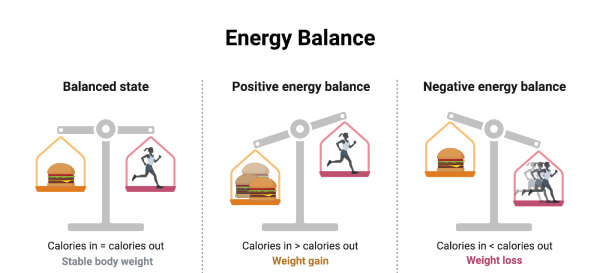
Understanding Calorie Deficit and Surplus
Your TDEE is the number of calories that maintains your current body weight. A calorie deficit (consuming less than TDEE) drives fat loss; a surplus (consuming more than TDEE) supports muscle gain. The Academy of Nutrition and Dietetics (AND) and most clinical guidelines recommend a deficit of 500–750 kcal/day for a safe loss rate of 0.5–1 kg per week - aggressive enough to produce results while preserving lean mass. For muscle gain, a modest surplus of 250–500 kcal above TDEE is generally recommended to support hypertrophy without excessive fat accumulation.
Very low calorie diets (below 1,200 kcal/day for women or 1,500 kcal/day for men, per NIH guidelines) can trigger metabolic adaptation - the body reducing its resting energy expenditure in response to sustained restriction - and should only be followed under medical supervision. TDEE is also not static: it decreases as body weight drops during a calorie deficit (because a lighter body burns fewer calories at rest), so recalculate every 4–6 weeks during an active weight-loss phase.
Useful Tips 💡
- Be honest about your true daily activity level. "Moderately Active" requires structured exercise 3–5 days per week - sedentary office workers typically fall in the Sedentary (×1.2) or Lightly Active (×1.375) bracket, even if they exercise occasionally.
- Track all liquid calories (coffee drinks, juices, alcohol) - research suggests these are underreported by 25–40% in self-reported dietary records and represent a common reason TDEE-based plans stall.
- If your weight has been stable for 2 weeks at a specific calorie level, that intake is your true maintenance - use it as a more accurate starting point than the calculated TDEE if the two differ.
📋Steps to Calculate
-
Enter your age, sex, weight (kg or lbs), and height (cm or inches).
-
Select your Physical Activity Level (PAL): Sedentary (×1.2), Lightly Active (×1.375), Moderately Active (×1.55), Very Active (×1.725), or Extra Active (×1.9).
-
Click "Calculate" to view your BMR, TDEE, and suggested calorie targets for your chosen goal.
Mistakes to Avoid ⚠️
- Overestimating activity level: selecting "Very Active" when actual output is closer to Lightly Active inflates TDEE by 300–500 kcal/day, making a "deficit" plan effectively a maintenance or surplus plan.
- Not accounting for the calorie content of condiments, cooking oils, sauces, and snacks, which are frequently omitted from tracking and can add 200–400 kcal/day.
- Failing to recalculate TDEE after significant weight changes (>5 kg). BMR is weight-dependent, so a fixed calorie target becomes progressively less accurate as body composition changes.
- Applying Mifflin-St Jeor for lean athletes with known body fat percentage: the Katch-McArdle formula [BMR = 370 + (21.6 × Lean Body Mass kg)] uses fat-free mass directly and may produce a more accurate estimate in this population.
Practical Applications📊
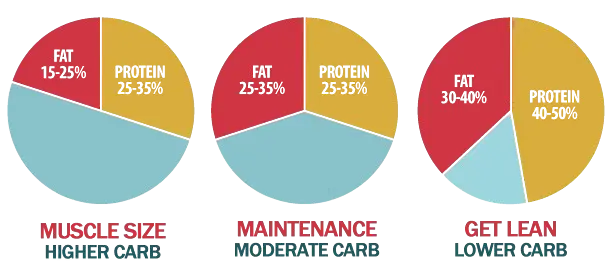
Use your TDEE as the baseline for daily meal planning - subtract 500 kcal for a weight loss target or add 250 kcal for lean muscle gain, keeping protein intake at 1.6–2.2 g/kg of bodyweight as supported by ISSN (International Society of Sports Nutrition) guidelines.
Pair with our BMI Calculator to contextualize your calorie targets within your current weight classification - for example, a TDEE-based deficit is more appropriate than an arbitrary low-calorie target when BMI is already in the normal range.
Recalculate TDEE every 4–6 weeks during active weight loss or gain phases, since body weight changes alter both BMR and TDEE. A 5 kg reduction in weight typically reduces TDEE by 50–100 kcal/day.