Body Shape Calculator

Analyze your body proportions and discover your silhouette category using precise measurements.

Measure without clothes, standing straight, tape level and snug but not tight.
Use same unit for all fields.

Was this calculator helpful?

4.7/5 (18 votes)

Calculation Examples

Calculation Case Result
Bust 36 in, Waist 26 in, Hips 38 in Classic Hourglass body shape
Bust 34 in, Waist 28 in, Hips 42 in Spoon body shape (Pear-variant)
Bust 35 in, Waist 30 in, Hips 35 in Rectangle body shape (Athletic)

How to Use the Body Shape Calculator?

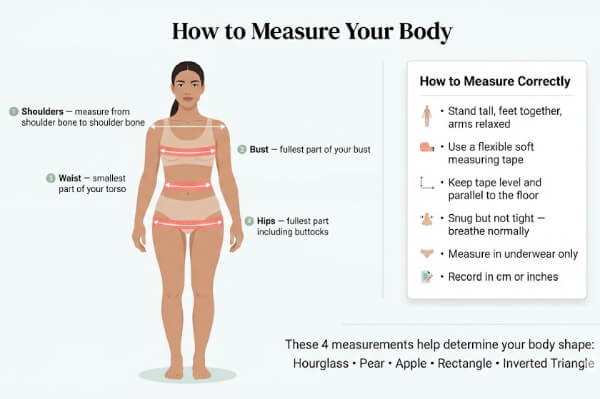
To achieve the most accurate results with our body shape calculator, you must start with precise physical data. We recommend using a soft, flexible measuring tape and standing in a neutral posture in front of a mirror.

First, measure your bust at the fullest point, ensuring the tape remains level across your shoulder blades. Second, locate your natural waist, which is the narrowest part of your torso, typically found just above the navel. Finally, measure your hips at the widest point of your buttocks with the tape parallel to the floor. For the highest degree of accuracy, take these measurements on bare skin and avoid pulling the tape too tight against the body.

Once you have your data, simply enter the values into the input fields, selecting either inches or centimeters. The calculator uses a logic-based algorithm to process your proportions and instantly classifies your figure into one of the five primary categories. This tool eliminates the subjectivity of visual self-assessment, providing a data-driven answer to the common question: what is my body shape?

How Body Shape is Calculated?

The methodology used in this calculator is based on established anthropometric standards and clothing design principles. Rather than relying on a single BMI-style number, our algorithm compares the ratios between your bust, waist, and hips to determine your geometric silhouette.

For instance, an hourglass body shape is defined by a balanced bust-to-hip ratio where the waist is significantly narrower—at least 9 inches smaller than the other two metrics. A spoon body shape is identified when the hips are notably wider than the bust (by 2 inches or more) and the waist remains defined. Conversely, a rectangle body shape is assigned when the measurements are relatively uniform, with less than an 8-inch difference between the waist and the larger of the bust or hips.

These thresholds are derived from extensive research in apparel sizing and human anatomy, ensuring that the results are consistent with how professional stylists and designers categorize human forms. By understanding the mathematical relationship between these points, you gain a clearer picture of your anatomical structure and how it relates to standard population proportions.

How to measure your body

Useful Tips 💡

  • Perform measurements at the same time of day, preferably in the morning, to maintain consistency across different tracking sessions.
  • If possible, have a second person assist you to ensure the measuring tape remains perfectly horizontal at the back of the bust and hips.
  • Keep a digital log of your measurements to track how your silhouette evolves during fitness or lifestyle changes.

📋Steps to Calculate

  1. Collect precise measurements for your bust (fullest point), waist (narrowest point), and hips (widest point).

  2. Input your data into the body shape calculator and ensure you have selected consistent units (Imperial or Metric).

  3. Review your results to see your silhouette classification and a detailed breakdown of your proportions.

Mistakes to Avoid ⚠️

  1. Positioning the waist measurement too low near the hip bones rather than at the natural indentation of the torso.
  2. Mixing units of measurement, such as entering inches for the bust and centimeters for the hips, which invalidates the ratio calculation.
  3. Altering your posture by sucking in your stomach or puffing out your chest, leading to inaccurate circumference data.
  4. Failing to keep the measuring tape level, which often results in inflated hip or bust measurements.

Why Your Results Matter📊

  1. Optimize your wardrobe by selecting clothing silhouettes that complement your natural proportions and improve garment fit.

  2. Tailor your fitness and strength training routines to focus on specific muscle groups that balance your frame and improve posture.

  3. Monitor physiological changes and body composition shifts over time to build long-term body confidence and awareness.

  4. Simplify online shopping by understanding which brand size charts align best with your specific figure type.

Questions and Answers

What is the most common body shape?

Statistical research indicates that the rectangle body shape is the most prevalent silhouette, appearing in approximately 46 percent of the adult female population. This type is characterized by a relatively straight frame where the waist measures less than 9 inches smaller than the bust or hips. The spoon body shape is the second most common at roughly 20 percent, followed by the inverted triangle at 14 percent and the classic hourglass body shape at about 8 percent. Using a body shape calculator is the most efficient way to see where you fall within these population statistics.

Does a woman's body shape change with age?

Yes, a woman's silhouette is dynamic and changes due to hormonal shifts, aging, and lifestyle factors. During puberty, estrogen levels promote hip and breast development. Pregnancy can permanently alter the width of the pelvis and bust volume. Furthermore, as women approach menopause, a reduction in estrogen often leads to a shift in fat storage from the hips to the midsection, potentially moving a figure from a pear or hourglass toward a rectangle. Regularly updating your data in the body shape calculator can help you monitor these natural transitions.

Can you change your body shape through diet or exercise?

While your fundamental bone structure (such as the width of your pelvis and shoulders) is determined by genetics after puberty, you can significantly influence your silhouette through muscle development and fat loss. For example, targeted glute and leg training can enhance a pear or spoon shape, while shoulder and latissimus dorsi exercises can create the illusion of a narrower waist in a rectangle shape. The body type calculator provides the baseline data necessary to set realistic aesthetic and functional fitness goals.

What are the 5 female body types?

The five primary female body shapes are categorized as: 1. Rectangle (balanced proportions with little waist definition), 2. Triangle or Pear (hips wider than the bust), 3. Hourglass body shape (balanced bust and hips with a narrow, defined waist), 4. Spoon body shape (hips wider than the bust with a shelf-like appearance and defined waist), and 5. Inverted Triangle (shoulders and bust broader than the hips). Our tool utilizes precise mathematical logic to differentiate between these often-confusing categories.

What does 36 24 36 mean in terms of body shape?

The measurements 36-24-36 (in inches) represent the traditional "ideal" hourglass body shape. This specific set of numbers describes a 36-inch bust and 36-inch hips—creating a perfectly balanced top and bottom—paired with a 24-inch waist that is 12 inches smaller than the outer metrics. In the metric system, this is roughly equivalent to 90-60-90 centimeters. While these specific numbers are often highlighted in media, any set of measurements with a similar ratio will be classified as an hourglass by the body shape calculator.

How does losing weight affect body shape?

Weight loss affects the silhouette differently for every individual based on their genetic fat distribution patterns (adipose tissue). Some women lose volume in their extremities and chest first, while others lose it from the abdominal region. For many, significant weight loss can shift a silhouette; for instance, losing fat from the lower body may move a spoon shape closer to a rectangle. Conversely, losing weight around the waist can reveal a hidden hourglass or pear shape. Tracking these shifts with the calculator provides insight into your body's unique metabolic response.

What formula does the body shape calculator use?

Our body shape calculator employs a proprietary algorithm based on the comparison of bust-to-waist and waist-to-hip ratios rather than a single formula. The logic follows the classification system developed by clothing scientists and anthropometrists. For example, to be classified as an hourglass body shape, the difference between the bust and hips must be less than 2 inches, and the waist must be at least 9 inches smaller than both. These specific numerical thresholds are used by the International Association of Clothing Science to ensure standardized and repeatable results for adult figures.
Disclaimer: This calculator is designed to provide helpful estimates for informational purposes. While we strive for accuracy, financial (or medical) results can vary based on local laws and individual circumstances. We recommend consulting with a professional advisor for critical decisions.