Budget Planner Calculator
Compare monthly income versus expenses to make informed, confident financial decisions.
Calculation Examples

How to Use the Budget Planner Calculator
Begin by entering your total Monthly Income — include your primary salary, any freelance or side income, and passive income sources such as rental or dividend payments. Once your income is set, move through each Expense Category: housing (rent or mortgage), groceries and dining, transportation, utilities, and entertainment.
Include smaller recurring costs that are easy to overlook, such as streaming subscriptions, gym memberships, or cloud storage fees. After entering all figures, click Calculate to generate your financial report. The tool displays your remaining monthly balance and categorizes your spending, helping you immediately identify where you are overspending and how much you can realistically redirect toward savings or debt repayment.
How Budget Calculations Work
The budget planner uses a straightforward but powerful cash flow equation: it sums all expense categories and subtracts the total from your monthly income to produce your net balance. Expressed simply: Balance = Income minus total expenses. A positive balance signals surplus capacity for saving or investing; a negative balance identifies a deficit that requires immediate adjustment. The calculator visually highlights your largest expense areas, making it easier to prioritize cuts and reallocate funds toward goals that matter most.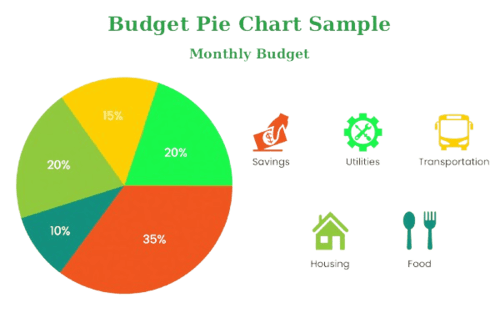
Useful Tips 💡
- Revisit your budget at the start of each month — variable costs like fuel, groceries, and utilities shift with seasons and market prices.
- Always allocate "Needs" (housing, food, utilities) before "Wants" — financial advisors commonly recommend covering fixed necessities first to avoid cash flow shortfalls.
📋Steps to Calculate
-
Enter your total monthly income from all sources, including salary, freelance work, and passive income.
-
Input monthly expenses across all categories: housing, food, utilities, transportation, entertainment, and miscellaneous.
-
Click Calculate to instantly view your net balance, spending breakdown, and actionable budget insights.
Mistakes to Avoid ⚠️
- Entering an aspirational budget instead of your actual spending — use bank statements from the last 2 to 3 months for accurate figures.
- Omitting irregular expenses such as annual insurance premiums, car maintenance, or holiday gifts — divide annual costs by 12 and include them monthly.
- Failing to update the budget when income or major expenses change — a budget built on stale numbers produces misleading results.
Practical Applications📊
Identify discretionary spending in entertainment or dining that can be reduced — even $50 to $100 monthly redirected to savings compounds meaningfully over a year.
Use your calculated surplus to set realistic, CFPB-aligned debt payoff targets — for example, applying an extra $200 per month reduces a $5,000 credit card balance in under 2 years at 20% APR.
Compare budgets month-over-month to track improvements in savings rate or debt reduction, reinforcing positive financial momentum with visible data.