Triangle Calculator
Solve Triangle Sides, Angles, and Area with Step-by-Step Logic
Select what you know about the triangle, then enter the values to calculate the rest.
Calculation Examples

How to Solve a Triangle?
To solve a triangle, enter at least three known values covering any valid combination: SSS, SAS, ASA, AAS, or SSA. The tool applies the Pythagorean theorem, \(a^2 + b^2 = c^2\), for right triangles and the Laws of Sines and Cosines for oblique cases. It also handles the ambiguous SSA case, flagging both solutions where two geometrically valid triangles exist.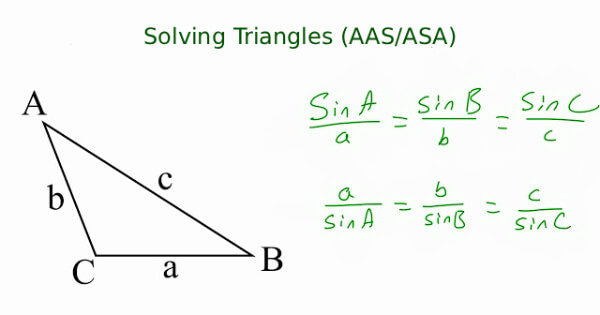
How This Calculator Works
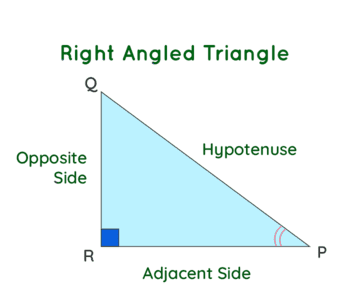
The triangle calculator resolves all unknown sides, angles, area, perimeter, altitudes, and medians from your input. For SSS (three known sides), it applies the Law of Cosines to derive each angle with full precision. For AAS or ASA (two angles and one side), it uses the Law of Sines. For right triangles, it combines the Pythagorean theorem with trigonometric ratios.
The SSA (side-side-angle) case is handled with particular care: depending on the relationship between the given side and the angle, the input may yield one triangle, two distinct triangles, or no valid triangle at all. The calculator identifies all valid solutions and presents them clearly. This makes it a reliable tool for geometry students, structural engineers, architects, and surveyors who need fast and verified triangle solutions.
Useful Tips 💡
- Always verify that the three interior angles in your result sum to exactly 180 degrees as a quick sanity check.
- For SSA inputs, read both solutions carefully before proceeding; in real-world design, choosing the wrong triangle can produce structurally invalid results.
📋Steps to Calculate
-
Enter at least three known values (sides or angles, or a combination).
-
Select triangle type if known (right, oblique, equilateral).
-
Click "Calculate" to receive all missing sides, angles, area, and perimeter.
Mistakes to Avoid ⚠️
- Entering side lengths that violate the triangle inequality theorem, for example sides of 1, 2, and 10, where the two shorter sides cannot reach each other to close the triangle.
- Mishandling the SSA ambiguous case by assuming only one triangle exists, when the geometry may support two entirely different valid triangles.
- Forgetting that all interior angles of any Euclidean triangle must sum to exactly 180 degrees; entering three angles that total more or less will produce an error.
Practical Applications📊
Calculate a right triangle's area from its legs: a 3-4-5 triangle, a classic Pythagorean triple, has legs of 3 and 4 units, giving an area of exactly 6 square units.
Find a hypotenuse from two known legs: legs of 5 and 12 units give a hypotenuse of exactly 13 units, another well-known Pythagorean triple useful for quick verification.
Calculate the area of an equilateral triangle: a side length of 6 units gives an area of approximately 15.59 square units.
Solve a surveying problem using ASA: with one measured side of 100 m and angles of 70° and 50° at its two ends, the Law of Sines gives the remaining sides as about 81.5 m and 92.2 m without measuring them directly.