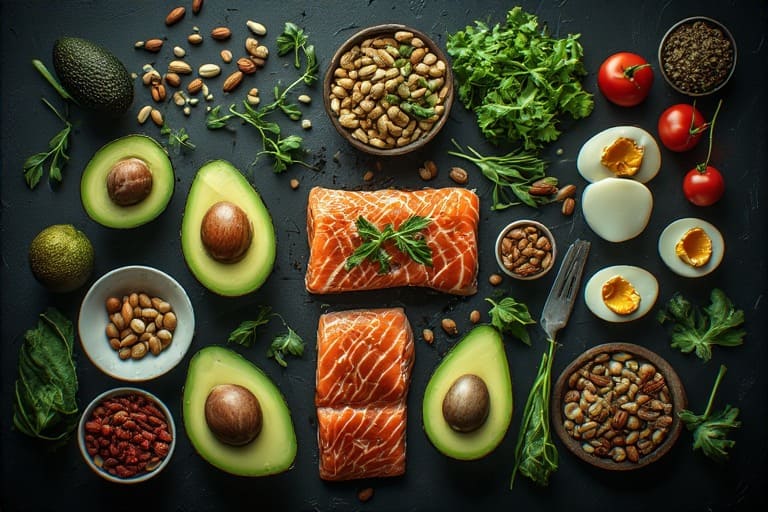
The ketogenic diet has been studied for over a century, first as a hospital treatment for epilepsy, and only much more recently as a weight-loss approach. That history matters, because a lot of what gets repeated about keto online skips straight past the science to the marketing. Here's what the actual research, medical history, and 2025-2026 clinical findings say about how ketosis works, where the diet came from, and where it genuinely helps or falls short.
Ketosis Process Explained
The body shifts into ketosis when carbohydrate intake drops low enough, generally somewhere between 20 and 50 grams a day, that liver glycogen stores run low. Once that happens, the liver starts converting fat into ketone bodies (beta-hydroxybutyrate, acetoacetate, and acetone) that the brain and muscles can burn as an alternative to glucose. A commonly cited starting macro split is roughly 70 to 75 percent of calories from fat, around 20 percent from protein, and 5 to 10 percent from carbohydrates, though exact ratios vary by goal and by how the diet is being used. Most people who stick to that range reach measurable ketosis within 2 to 4 days, though it can take up to a week depending on activity level, prior carbohydrate intake, and individual metabolism. Ketone levels can be checked with blood meters (the most accurate), urine strips (cheap but less precise over time), or breath analyzers that detect acetone, each method measuring a slightly different thing, so results don't always match exactly between methods.
Types of Ketogenic Diets
"Keto" covers more than one eating pattern. The standard ketogenic diet (SKD) is the version described above. The targeted ketogenic diet (TKD) adds a small amount of fast-digesting carbohydrate around workouts for athletes who need quick fuel without leaving ketosis for long. The cyclical ketogenic diet (CKD) alternates several strict keto days with planned higher-carbohydrate refeed days, a pattern used mostly by bodybuilders and strength athletes. A high-protein variant raises protein to around 35 percent of calories at the expense of fat, which can suit people who struggle to feel full on the standard ratio. The original medical version used to treat epilepsy is stricter than all of these, often built around a 4:1 ratio of fat to combined protein and carbohydrate, and it's typically run under a hospital dietitian's supervision rather than self-managed.
Epilepsy Success Stories
The most famous modern case is Charlie Abrahams, son of Hollywood producer Jim Abrahams. After Charlie developed severe, drug-resistant epilepsy as a toddler in the early 1990s, his family brought him to Johns Hopkins Hospital, where the ketogenic diet brought his seizures under control within weeks. Jim and Nancy Abrahams founded the Charlie Foundation for Ketogenic Therapies in 1994 to spread the word, and a Charlie Foundation-funded multicenter study published in 1998 gave the therapy its first modern scientific backing. The numbers behind that early publicity have held up: across pooled clinical data, the ketogenic diet reduces seizure frequency by more than 50 percent in roughly half of the children who try it, and by more than 90 percent in about a third. Hospitals worldwide still use modified, less restrictive versions, such as the modified Atkins diet, for drug-resistant epilepsy in both children and adults today.
Rapid Initial Weight Loss
Much of the early weight drop on keto comes from glycogen depletion and the water that's released along with it, since each gram of stored glycogen holds onto roughly 3 grams of water. Clinical reviews describe an average loss of up to 10 pounds in the first week or two for many people, and that number is mostly water, not fat. Sustained adherence is what eventually shifts the loss toward actual fat, through a combination of appetite suppression and increased fat oxidation, but that water weight typically returns just as quickly once carbohydrates are reintroduced, which is one of the most common sources of disappointment and confusion for people trying the diet short-term.
Health calculators cover nutrition tracking and macros.
Here are eight unexpected keto facts:
- Physicians in ancient Greece, including Hippocrates, prescribed fasting for seizures more than 2,000 years before anyone understood the underlying biochemistry of ketosis.
- Medium-chain triglycerides (MCTs) from coconut oil bypass some of the normal fat-digestion steps and convert to ketones faster than long-chain fats like olive oil or butter.
- Breath analyzers detect acetone as a ketosis marker, but breath readings correlate only loosely with blood ketone levels, so they're convenient rather than precise.
- Some endurance athletes successfully adapt to burning fat for fuel in long, steady events, but the evidence is mixed, and the diet can blunt performance in shorter, high-intensity efforts that depend on fast glycolysis.
- Gut bacteria composition shifts noticeably on keto, favoring species that thrive on fat over those that ferment fiber, though researchers are still working out whether that shift is net helpful or harmful long-term.
- Green leafy vegetables supply most of the carbohydrate allowance on strict keto plans, since they're high in fiber and water relative to digestible carbs.
- Insulin levels drop sharply once the body adapts to keto, which is the main reason researchers study it as an add-on approach for managing type 2 diabetes alongside, not instead of, medical care.
- The "keto flu" most people report in the first week overlaps heavily with symptoms of low sodium and potassium, not carbohydrate withdrawal on its own, which is why electrolyte replacement often resolves it within days.
Modern Popularity Surge
Celebrities and social media drove a major surge in keto's popularity for weight loss over the past decade, well beyond its original medical use. Variations like the targeted keto diet described above let people fit carbohydrates around workouts without leaving ketosis for long. Researchers are also exploring ketogenic approaches for neurological conditions beyond epilepsy, including Alzheimer's disease and Parkinson's disease, on the theory that ketones can fuel brain cells that have trouble using glucose efficiently. That research is still early and exploratory, mostly small trials and animal studies, so it isn't yet an established treatment for either condition the way the ketogenic diet is for drug-resistant epilepsy.
Dedicated tools calculate macros and track ketosis progress at our Keto Calculator.
Managing Keto Flu and Electrolytes
The fatigue, headache, irritability, and brain fog many people feel in the first few days of keto trace back to fluid and electrolyte loss as glycogen stores empty out, combined with lower insulin levels, which cause the kidneys to excrete more sodium than usual. Replacing what's lost, generally an extra 3 to 5 grams of sodium a day from food or broth, along with adequate potassium and magnesium from leafy greens, avocado, and nuts, resolves most keto flu symptoms within a few days to a week. Staying well hydrated matters just as much, since the water loss that comes with glycogen depletion is real even though it isn't fat loss.
Common Keto Myths
Many people assume keto means unlimited protein, but eating too much protein can trigger gluconeogenesis, the liver's process of turning amino acids into glucose, which can slow or disrupt ketosis for some people. Another common myth treats all carbohydrates as harmful, when in a non-keto context the quality and source of carbohydrate matters far more than simply avoiding it; keto's strict limit is a tool for reaching ketosis, not a universal nutrition rule. A third, medically important myth conflates nutritional ketosis with diabetic ketoacidosis (DKA): the ketone levels reached on a well-formulated keto diet, typically under 3 millimoles per liter, are far below the dangerous levels seen in DKA, which usually exceed 15 to 20 millimoles per liter alongside dangerously high blood sugar. They share a name but are not the same condition, and people with diabetes should still only attempt keto under medical supervision given the very different risk profile. Finally, claims that keto is an easy, permanent lifestyle change tend to ignore real adherence data: one umbrella review of weight-loss trials found 61 percent of participants still in ketosis at 6 weeks, but only about 7 percent still maintaining it at 12 months.
These nine historical developments shaped keto therapy:
- 5th century BC: Hippocrates documents that fasting reduces seizure frequency, centuries before the biochemistry behind it was understood.
- 1911: French physicians Guelpa and Marie publish the first modern clinical study of fasting as an epilepsy treatment, sparking interest in finding a more sustainable alternative to outright fasting.
- 1921: Dr. Russell Wilder at the Mayo Clinic coins the term "ketogenic diet" and is the first to use it clinically to treat epilepsy patients.
- 1938: The introduction of phenytoin and other new anticonvulsant drugs gives physicians an easier alternative to the diet, and its use declines sharply through the mid-20th century.
- 1971: Pediatric neurologist Peter Huttenlocher introduces the MCT-oil ketogenic diet, a more flexible variant that doesn't require as strict a fat ratio.
- 1994: Jim and Nancy Abrahams found the Charlie Foundation after their son Charlie's epilepsy responds dramatically to the diet at Johns Hopkins, reigniting public and clinical interest.
- 1998: The first prospective multicenter study of the ketogenic diet for pediatric epilepsy, supported by the Charlie Foundation, gives the therapy its modern scientific foundation.
- 2000s-2010s: Less restrictive versions, including the modified Atkins diet, expand access for older children and adults who can't tolerate the classic 4:1 ratio.
- 2025: The KETO-CTA imaging trial publishes long-term coronary plaque data on lean, high-LDL keto dieters, sharpening the clinical conversation around cardiovascular monitoring on the diet.
Potential Drawbacks Considered
Beyond the keto flu, long-term concerns include nutrient shortfalls from sharply limiting fruits, whole grains, and legumes, along with a higher reported risk of kidney stones in some studies. Saturated fat intake runs high on most keto plans, and for most people LDL cholesterol rises at least somewhat as a result. A specific subgroup, lean, metabolically healthy people who see especially large LDL increases, has been studied under the label "lean mass hyper-responder," and for years it was an open question whether their cardiovascular risk actually tracked with their LDL numbers. A 2025 follow-up from the KETO-CTA trial found that this group's coronary artery plaque did progress over time in proportion to their cholesterol exposure, similar to other populations with elevated LDL, which weakens the earlier hope that this phenotype might be a harmless exception. Anyone with significantly elevated LDL on keto should discuss lipid monitoring with a doctor rather than assume a lean build offsets the risk. Combined with the adherence numbers above, the realistic picture is a diet that works well for specific medical uses and produces real short-term results for weight and metabolic markers, but one that's hard to sustain and needs medical input for anyone with diabetes, kidney issues, or a personal or family history of high cholesterol.
The ketogenic diet started as a medical treatment for epilepsy roughly a century ago and only later gained fame as a weight-management approach. The science backs real, specific benefits, especially for drug-resistant epilepsy and short-term metabolic improvements, while also showing clear limits around long-term adherence and cardiovascular monitoring for some people. Individual responses vary by genetics, activity level, and how closely the plan is followed, so the honest takeaway is that keto is a legitimate tool with real tradeoffs, not a universal fix or a diet to fear outright.