This breakthrough transformed arithmetic and enabled modern algebra. Without zero, positional notation - the system used today - would collapse.
Pi Across Cultures
People approximated the ratio of circumference to diameter for millennia. Ancient Egyptians used 3.16, while Babylonians refined it to 3.125. Archimedes narrowed it between 3.1408 and 3.1429 using polygons. Today, supercomputers calculate trillions of digits, yet pi remains irrational and transcendental. Its endless nature continues to challenge computation methods.
Infinity Challenges Logic
Georg Cantor proved the existence of different sizes of infinity in the late 19th century. Countable infinity covers integers, while real numbers form an uncountably larger set. This leads to paradoxes like Hilbert's hotel - a full infinite hotel can always accommodate more guests by shifting rooms. Such ideas stretch intuitive understanding of quantity and set theory.
Golden Ratio in Nature
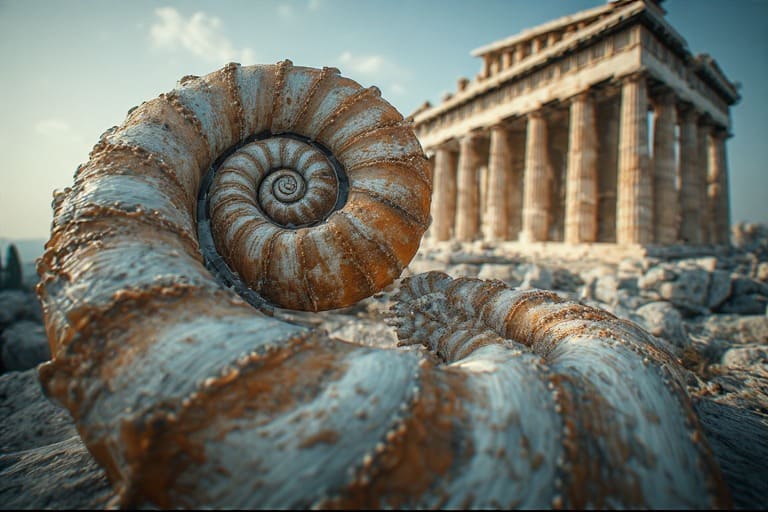
The ratio approximately 1.618 appears in sunflower seed arrangements, pinecones, and nautilus shells. Ancient Greeks applied it in architecture, notably the Parthenon. Renaissance artists used it for composition balance. Modern studies confirm its role in efficient packing and growth patterns across biology.
Prime Numbers Mystery
Primes lack a simple predictive formula despite extensive study. The Riemann hypothesis, proposed in 1859, concerns the distribution of primes and remains unsolved - one of the Clay Mathematics Institute's Millennium Problems worth a million dollars. Primes underpin cryptography in secure online transactions.
Here are six intriguing properties of everyday numbers:
- 1 serves as neither prime nor composite - it stands alone in classification.
- 2 is the only even prime, making it unique among the infinitude.
- 6174 emerges as the endpoint when rearranging the digits of most four-digit numbers and subtracting, known as Kaprekar's routine.
- 142857 reveals cycles in fractions like 1/7, with multiples showing rotated patterns.
- 9 detects divisibility - sum digits repeatedly until a single digit; if 9, the original divides evenly.
- 1729 gains fame as the smallest number expressible as sums of two cubes in two ways - the Hardy-Ramanujan number.
Euler's Beautiful Equation
Leonhard Euler linked five fundamental constants in 1748: e^{iπ} + 1 = 0. This identity connects exponentials, imaginaries, and trigonometry in one elegant statement. Mathematicians often call it the most profound equation for its compact unity.
Fractals Reveal Patterns
Benoît Mandelbrot coined the term " fractals in 1975 for shapes with self-similarity at every scale. The Mandelbrot set, defined by simple iteration, produces infinite complexity from basic rules. Fractals model coastlines, mountains, and blood vessels in nature.
Practical applications extend beyond theory. Online tools allow direct exploration of concepts like division and remainders. Visit the mathematics section for various calculators covering algebra, geometry, and more.
Division often leaves remainders in integer contexts. The remainder theorem states that a polynomial f(x) divided by (x - c) yields f(c) as the remainder. Test this with specific values on dedicated tools like our remainder calculator.
Paradoxes That Puzzle
Zeno's paradoxes from ancient Greece argue motion is impossible - Achilles never overtakes a tortoise with a head start due to infinite divisions. Calculus later resolved them with limits and convergence.
These seven historical breakthroughs shifted mathematical understanding:
- Euclid's Elements organized geometry around 300 BC with axioms and proofs.
- Newton's calculus invented differential methods for change and motion in the 17th century.
- Gauss solved the 17-term constructible polygon problem at age 19.
- Gödel's incompleteness theorems proved limits in formal systems in 1931.
- Turing laid the foundations for computability and modern computing in 1936.
- Andrew Wiles proved Fermat's Last Theorem in 1994 after centuries.
- Perelman's proof of the Poincaré conjecture completed the milestones in 2002.
Mathematics blends certainty with endless discovery. Patterns persist, proofs endure, yet questions remain open. These facts highlight its depth and ongoing relevance in science and daily life.