Average Speed Calculator
Calculate Your Average Travel Speed Instantly in Any Unit
Calculation Examples

How to Use the Average Speed Calculator
Enter the total distance travelled and the total time taken for the journey. Select the appropriate units (miles and hours for driving, kilometers and hours for most international use, or meters and seconds for athletic and physics applications).
After clicking "Calculate," the tool returns your average speed in multiple formats: mph, km/h, and m/s simultaneously. Note that this calculator uses total elapsed time, including any stops, pauses, or traffic delays, which gives the true average speed for the complete journey rather than the moving average only.
How Is Average Speed Calculated?
Average speed is calculated by dividing total distance by total elapsed time: \[ \text{Average Speed} = \dfrac{\text{Total Distance}}{\text{Total Time}} \] This is a scalar formula with no directional component. The calculator accepts inputs in any supported unit combination and automatically converts the result into mph, km/h, and m/s. For multi-leg journeys with different speeds on each segment, the true average speed is total distance divided by total time, not the arithmetic mean of the individual segment speeds. For example, driving 60 km at 60 km/h then 60 km at 120 km/h gives an average speed of 80 km/h, not 90 km/h, because more time is spent at the lower speed.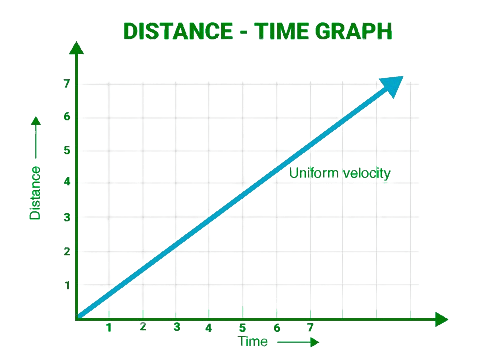
Useful Tips 💡
- Use total elapsed time including stops for the most accurate average speed. Using only moving time overstates your effective travel rate and leads to optimistic journey time estimates.
- Always verify that distance and time units are compatible before calculating. Entering distance in kilometers with time in minutes without adjustment produces a result in km/min, not km/h.
📋Steps to Calculate
-
Enter the total distance of the journey in your preferred unit (miles, kilometers, or meters).
-
Enter the total elapsed time including stops, in hours, minutes, or seconds.
-
Click "Calculate" to receive average speed in mph, km/h, and m/s simultaneously.
Mistakes to Avoid ⚠️
- Using only moving time and excluding stops or traffic delays. This produces the moving average speed rather than the true average speed, which overstates travel efficiency for planning purposes.
- Confusing speed with velocity. Average speed is total distance divided by total time and is always positive. Average velocity is displacement divided by time and can be zero or negative if the start and end points are the same or reversed.
- Mixing unit systems without conversion. Entering distance in miles and time in minutes gives speed in miles per minute, which must be multiplied by 60 to convert to mph.
Practical Applications📊
Monitor driving efficiency on a full trip: a 300-mile road trip completed in 5.5 hours including stops averages about 54.5 mph, useful for comparing routes or fuel consumption.
Track running pace against training targets: a 10 km run completed in 50 minutes averages 12 km/h, equivalent to a 5:00 min/km pace.
Estimate delivery route timing: a courier covering 45 km across a city in 1 hour 30 minutes, including stops, averages 30 km/h, a useful benchmark for scheduling future routes.
Plan a multi-day hike: covering 18 km in 6 hours of trail time, including rest breaks, gives an average pace of 3 km/h, helpful for estimating arrival time at each waypoint.