Scientific Calculator
Scientific Calculator for Advanced Math, Trigonometry, and Engineering

📋How to Use Scientific Calculator?
-
Enter your equation or use advanced functions.
-
Select degrees or radians for trig calculations.
-
Click "Calculate" for instant results.
Enter your equation using the calculator’s buttons or keyboard. For more mathematics, use advanced functions like sin, cos, tan, or logarithm. Click “Calculate” to see multiple results rapidly. You can toggle between degrees and radians for accurate trig precision. This is great for learners and workers handling a wide variety of mathematics and physics problems.
Useful Tips💡
-
Always use parentheses for the denominator of fractions or the argument of functions (e.g., sin(x+y)).
-
Verify that your angle mode (Degrees/Radians) matches the requirement of your problem.
Mistakes to Avoid ⚠️
- Forgetting to close parentheses, which can severely distort the order of operations and the result.
- Using degrees when the problem requires radians (or vice versa) in trig functions.
- Confusing the natural logarithm (ln) with the base-10 logarithm (log).
- Typing a chain of operations without verifying the correct algebraic entry.
What is a Scientific Calculator?
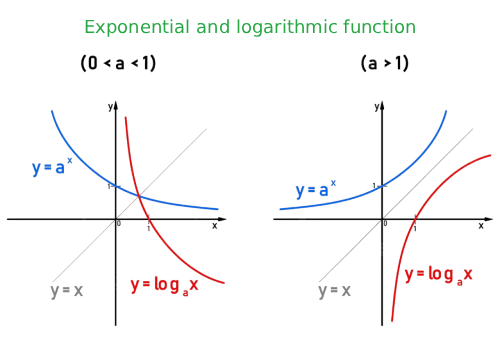
A scientific calculator is a robust resource that is engineered for significant mathematical, scientific, and engineering calculations. Unlike basic tools, a it can handle complex types of math, such as trigonometric functions (sine, cosine, tangent), logarithmic mathematics, exponential functions, and statistical calculations.
Scientific solvers are relied upon by students, engineers, and scientists who regularly work with algebra, calculus, physics, or other forms of data analysis. The online scientific solvers of the present day have user-friendly menus and tools so that you can easily compute equations, graph functions, or determine probabilities.
Simply enter the values or expressions into the interface and it will perform an exact calculation for you, whether the use is academic or professional.
Practical Applications📊
-
Solve trigonometry equations for physics assignments.
-
Pair with our Standard Deviation tool for data analysis.
-
Explore trigonometric functions for engineering projects.
Questions and Answers
What is a scientific calculator?
A scientific math calculator is used for complex calculations and sciences such as physics, math, engineering, trigonometry, logarithms, and exponents. With an online advanced calculator like CalcMate, students and professionals can solve complex equations with reliable outcomes.
How to operate a professional calc for trigonometry?
To use this calc online for trig, you will enter the angle and then push the necessary trig function like sin, cos or tan; and choose degree or radian and hit calculate! This function makes solving trigonometric equations much easier and way more efficient for geometry and physics assignments.
Is physics solved by a scientific calculator?
These tools are amazing when you have to do calculations that require physics. Research-based tools are also best for computations where speeds and accuracy are important with values requiring exponents, logarithms or trig functions for velocity or energy.
How do I Compute sin, cos and tan?
To complete a sine, cosine, or tangent calculation, simply select the function you want, enter the angle, then determine if you want to see the answer in degrees or radians, and select "Calculate." You will be provided the exact trigonometric answer to your calculations for use in geometry or physics.
Which formulas are used in this calc?
Our tool can deal with a variety of mathematical expressions, including a number of trigonometric expressions such as sine, cosine, and tangent, logarithmic expressions such as log and ln (base 10 or a base of e), and the like. Exponential expressions, such as e^x and 10^x, can also be handled. All such calculations rely on the JavaScript calculations of the advanced math and physics problems which, of course, use the correct calculations according to IEEE International standards.
What is the difference between Scientific and Basic Calculators?
A basic calculator only handles the four fundamental operations (+, -, ×, ÷). A scientific calculator adds hundreds of functions, memory storage, and ability to handle scientific notation and complex equations.
What does it mean to switch between degrees and radians?
Degrees measure angles from 0° to 360° (or 0 to 2\pi radians). Radians are used in advanced math. Switching modes tells the calculator which angular unit to use, fundamentally changing the result of trig functions.
Does the Scientific Calculator support complex numbers?
This tool is optimized for real number calculations, including all standard advanced math. It does not currently support complex numbers (e.g., a + bi).