Grade Point Average Calculator

Calculate semester or cumulative GPA on the unweighted 4.0 scale or weighted 5.0 scale for AP, Honors, and IB courses - using the standard credit-weighted arithmetic mean formula.

Сalculate grade point average (GPA) and generate a GPA report. Modify the values and click the Calculate button to use.

Course Credits Score Grade

Was this calculator helpful?

4.5/5 (18 votes)

Calculation Examples

Calculation Case Result
4 courses: A (3 cr), A (3 cr), A (3 cr), B (3 cr) GPA = ((4.0 × 3) + (4.0 × 3) + (4.0 × 3) + (3.0 × 3)) ÷ (3+3+3+3) = 45 ÷ 12 = 3.75
Weighted: AP course (A=5.0, 4 cr) + Standard (B=3.0, 3 cr) GPA = ((5.0 × 4) + (3.0 × 3)) ÷ (4+3) = 29 ÷ 7 ≈ 4.14 (weighted)
GPA recovery: 2.5 GPA over 60 credits, target 2.8 Need ((2.8 × 90) − (2.5 × 60)) ÷ 30 = (252 − 150) ÷ 30 = 3.4 GPA in next 30 credits
Honor roll threshold: current 3.42 GPA (45 cr), 15 cr remaining Need ((3.5 × 60) − (3.42 × 45)) ÷ 15 = (210 − 153.9) ÷ 15 = 3.74 in remaining 15 credits

How to Use the GPA Calculator

Enter each course name (optional), its letter grade, and its credit hours. Select your grading scale: unweighted 4.0 (standard) or weighted 5.0 (for schools that award bonus points for AP, Honors, or IB courses). Click "Calculate" to see your semester GPA and, if you enter prior-semester data, your cumulative GPA.

The calculator applies the credit-weighted arithmetic mean formula: $$\text{GPA} = \frac{\sum_{i=1}^{n} (G_i \times C_i)}{\sum_{i=1}^{n} C_i}$$ where $G_i$ is the grade point value for course $i$ and $C_i$ is the number of credit hours for that course. Higher-credit courses therefore carry proportionally greater weight in the final GPA - a 4-credit course affects the GPA twice as much as a 2-credit course with the same grade.

Letter Grades and Numerical Equivalents

Most US institutions use one of two grade point scales. The standard unweighted 4.0 scale assigns the same point values regardless of course difficulty: A+ = 4.0 (some institutions: 4.3), A = 4.0, A− = 3.7, B+ = 3.3, B = 3.0, B− = 2.7, C+ = 2.3, C = 2.0, C− = 1.7, D+ = 1.3, D = 1.0, D− = 0.7, F = 0.0. Pass/Fail grades are typically excluded from GPA calculation.

The weighted 5.0 scale adds bonus points for rigorous courses: standard courses use the same 4.0 values; Honors or pre-AP courses add +0.5 (so A = 4.5); AP, IB, or dual-enrollment courses add +1.0 (so A = 5.0). The specific bonus applied depends on school policy - verify your institution's exact weighting before selecting this option. A weighted GPA above 4.0 is common and expected by college admissions offices that use this scale; when comparing GPAs across schools, unweighted GPA provides the most consistent basis.
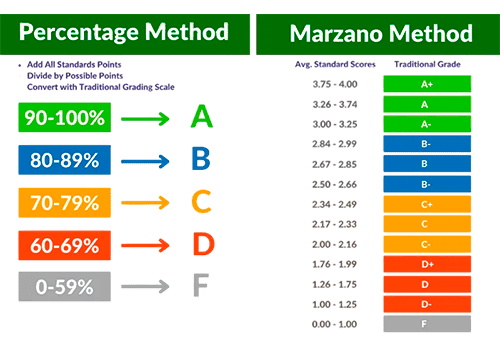
GPA scale: letter grade to grade point conversion table for 4.0 unweighted and 5.0 weighted scales

Useful Tips 💡

  • Verify your school's exact grade point value for plus/minus grades before entering data. Common variation: some schools assign A+ = 4.3, others cap at A+ = 4.0. A single point difference in a high-credit course can shift GPA by 0.05–0.10.
  • For cumulative GPA calculation, treat all prior coursework as a single entry: multiply your previous cumulative GPA by your total prior credit hours to get prior grade points, then add current semester data. This is mathematically equivalent to entering every course individually.

📋Steps to Calculate

  1. Enter each course's letter grade and credit hours. Add as many courses as needed.

  2. Select the grading scale: unweighted 4.0 or weighted 5.0 (for AP/Honors/IB courses).

  3. Click "Calculate" to view semester GPA. Add prior semester data to calculate cumulative GPA.

Mistakes to Avoid ⚠️

  1. Using the unweighted scale when your school uses weighted grading, or vice versa. An A in a weighted AP course is worth 5.0 under the weighted scale but only 4.0 under the unweighted scale - mixing scales produces a GPA that neither system would recognize.
  2. Assuming A− = 4.0. On the standard plus/minus scale, A− = 3.7, not 4.0. Only A and A+ (at some institutions) receive 4.0. This distinction matters for GPA calculations near key thresholds like 3.5 (Magna Cum Laude) or 3.7 (Summa Cum Laude).
  3. Including Pass/Fail or audit courses in the GPA calculation. These designations are specifically designed to exclude courses from GPA computation - including them distorts the weighted mean.
  4. Confusing semester GPA with cumulative GPA. Semester GPA reflects only current-term courses; cumulative GPA includes all completed credit hours. A strong semester GPA does not immediately translate to a large cumulative GPA increase when the prior credit base is large.

Practical Applications📊

  1. College admissions tracking: most US colleges publish their admitted students' average GPA. Calculate your current cumulative GPA against these targets to assess competitiveness and identify which remaining courses have the greatest leverage for improvement.

  2. GPA recovery planning: if your cumulative GPA has declined, model how many credit hours at what grade point level are required to bring it to a target value. Because cumulative GPA is a weighted mean of all past credits, improving it from 2.5 to 3.0 requires sustained high performance over many credit hours - the calculator quantifies exactly how many.

  3. Scholarship and academic standing eligibility: most scholarship programs and academic honor societies specify a minimum GPA threshold (e.g., 3.5 for Dean's List eligibility at many institutions). Enter your current courses and planned grades to project whether you will meet the threshold at semester end.

Questions and Answers

What is a GPA calculator and what formula does it use?

A GPA (Grade Point Average) calculator applies the credit-weighted arithmetic mean formula: $$\text{GPA} = \frac{\sum_{i=1}^{n} (G_i \times C_i)}{\sum_{i=1}^{n} C_i}$$ where $G_i$ is the grade point value assigned to the letter grade in course $i$, and $C_i$ is the credit hour weight of that course. The result is a single number on the 0.0–4.0 scale (or 0.0–5.0 for weighted) that represents academic performance weighted by the credit value of each course. A 4-credit course affects GPA twice as much as a 2-credit course with the same letter grade.

How do you calculate GPA for a semester or for college?

For each course, multiply the grade point value by the credit hours to get quality points ($G_i \times C_i$). Sum all quality points, then divide by the total credit hours. Example: three 3-credit courses with grades A (4.0), B+ (3.3), and C (2.0): quality points = 12.0 + 9.9 + 6.0 = 27.9; total credits = 9; GPA = 27.9 / 9 = 3.10. For cumulative GPA across multiple semesters, sum all quality points from all semesters and divide by all credit hours from all semesters - not by averaging the semester GPAs, which would produce an incorrect result if credit loads differ by semester.

What is the difference between unweighted and weighted GPA?

An unweighted GPA uses the same grade point values regardless of course difficulty - A = 4.0 whether the course is standard, Honors, or AP. A weighted GPA awards additional points for rigorous courses: typically +0.5 for Honors/pre-AP (so A = 4.5) and +1.0 for AP, IB, or dual-enrollment (so A = 5.0). This reflects the increased academic difficulty of these courses. The Common App and most US college applications ask for both, as weighted GPA can exceed 4.0 and is not directly comparable across schools with different weighting policies. Unweighted GPA provides the most consistent cross-school comparison.

How is cumulative GPA calculated across multiple semesters?

Cumulative GPA is the credit-weighted mean across all completed semesters: sum all quality points (grade points × credits) from every semester, then divide by the total credit hours completed. It is not the arithmetic average of semester GPAs - that calculation would be wrong unless credit loads are identical in every semester. Example: Semester 1: GPA 3.5 over 15 credits (52.5 quality points); Semester 2: GPA 3.0 over 18 credits (54.0 quality points); Cumulative = 106.5 / 33 = 3.23, not (3.5 + 3.0) / 2 = 3.25.

What are the standard letter grade to grade point conversions?

The most common US unweighted 4.0 scale: A+ = 4.0 (some institutions: 4.3), A = 4.0, A− = 3.7, B+ = 3.3, B = 3.0, B− = 2.7, C+ = 2.3, C = 2.0, C− = 1.7, D+ = 1.3, D = 1.0, D− = 0.7, F = 0.0. Grading scales are set by individual institutions, not by a national standard - verify your school's specific scale before entering data. The values above represent the most widely used convention among US colleges and universities.

Can I use the GPA calculator to find what grades I need to reach a target GPA?

Yes. Rearrange the weighted mean formula: target quality points for remaining credits = (Target GPA × Total credits at end) − (Current quality points). Then divide by remaining credits to find the required average GPA for the remaining coursework. Example: current 2.5 GPA over 60 credits = 150 quality points; target 3.0 over 90 credits = 270 quality points needed; quality points needed in remaining 30 credits = 270 − 150 = 120; required GPA = 120 / 30 = 4.0. This shows that recovering a GPA by the final semester requires earning a perfect GPA in all remaining courses.

Can I calculate my cumulative GPA for multiple semesters at once?

Yes. Enter every course from every completed semester - grade and credit hours - into the calculator. Because GPA is a weighted mean of all credit hours, all courses must be included for an accurate cumulative result. As a shortcut for large histories: multiply your existing cumulative GPA by your total prior credit hours to convert it to quality points, enter that as a single line item with those credits, then add current semester courses. The formula produces the same result as entering each course individually.
Disclaimer: This calculator is designed to provide helpful estimates for informational purposes. While we strive for accuracy, financial (or medical) results can vary based on local laws and individual circumstances. We recommend consulting with a professional advisor for critical decisions.